
“I was told I had IBS. Then I woke with Sully, my stoma”
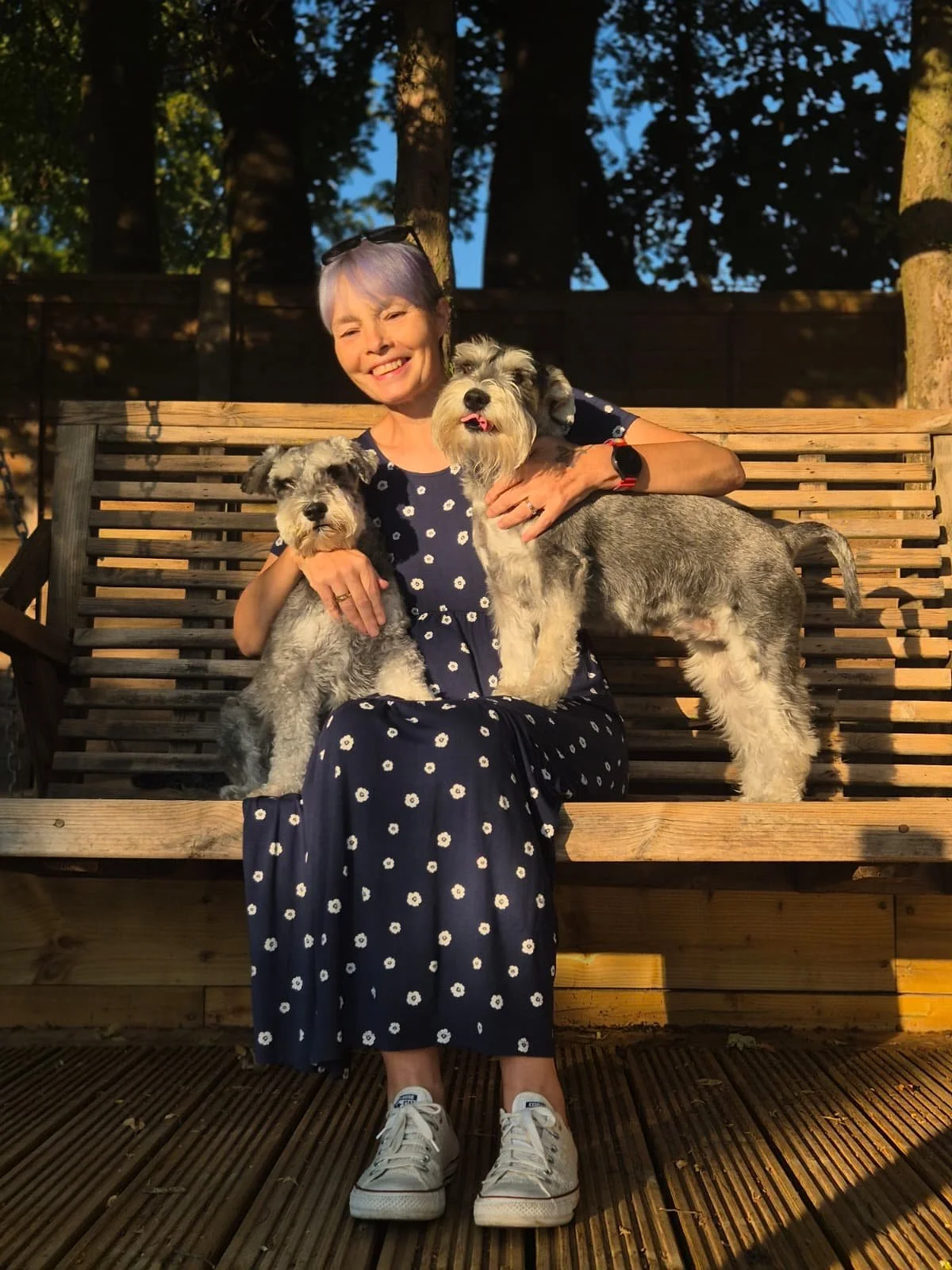
Joanne Harrap with her dogs, George and Eddie
New ostomate Joanne Harrap shares her journey to having her stoma Sully, her top tips post-surgery, and how The Ostomate Journal has helped her regain confidence with food
Hi Jo! Could you tell us about your stoma surgery journey?
Joanne Harrap: My journey started many years ago with tummy ache and seeing doctor after doctor, always being told I had IBS. My ‘IBS’ involved terrible spasms in my tummy, the inability to go to the toilet unless I had taken a handful of laxatives and generally feeling so unwell that I missed out on so many things because I couldn’t get out of bed. I was convinced it couldn’t just be IBS.
Everything changed when I was rushed to hospital with what I thought was another IBS flare-up. A CT scan revealed I had a life-threatening volvulus (twisted colon). The bowel was untwisted, but I was told it could happen again because my sigmoid colon was very floppy. When I got home, my symptoms became even worse. I couldn’t eat, I was constantly nauseous, losing weight rapidly, and was in pain every day. After being discharged with no further treatment unless the volvulus returned, I was fortunate to be able to see private colorectal surgeon Mr Tarun Singhal through my husband’s health insurance.
Mr Singhal listened to me, asked questions no one had ever asked before, and arranged further tests. He found I still had a volvulus and confirmed my sigmoid colon was very floppy and loose. The plan was to remove 40cm of bowel and rejoin it and he told me he hoped to avoid giving me a stoma.
When I woke up from surgery six hours later, Sully – my stoma – was by my side. Mr Singhal explained that my bowel was four times the size it should have been and so badly distended that it couldn’t be rejoined, so he had no choice but to create what he hoped would be a temporary stoma while further investigations were carried out.
The next few months were incredibly difficult. I had repeated blockages, more hospital admissions and a motility study that showed my large bowel wasn’t working properly. Even after weeks, the markers from the test had barely moved through my colon. By this point I was surviving on liquids and had lost almost 15 kilograms. Together, we decided the only option was a subtotal colectomy. My colostomy was closed and I now have a permanent ileostomy.
It’s still early days, but I can eat solid food again, I have an appetite, and I don’t wake up feeling unwell all the time. I’m very proud of Sully, and together we’re going to have a happy life.
“The Ostomate Journal has built my confidence in knowing why I feel bloated or uncomfortable, as I can look at my notes and find the answer.”
What advice would you give to someone who is preparing for ostomy surgery or is new to life with a stoma?
Joanne: Lean heavily on your stoma care nurses before and after operation. No question is silly. Ask them about eating habits, what clothes to wear, how to shower and how to manage the emotional side of what’s happening to your body. Your body and mind need time to heal.
Accept help from family and friends, even if you think you can do everything when you get home from hospital but listen to your body and rest. Find a local stoma support group too – you’ll make amazing friends and it’s so nice to talk to others going through what you are.
How has The Ostomate Journal helped you?
Joanne: Firstly, the shopping list and foods to eat and avoid pages are brilliant, so easy to see at a glance what is good for me in the first few weeks and what I should avoid. It makes shopping much easier.
Having the journal has helped me track exactly how different meals affect my stoma output, by writing down what I’ve eaten, quantity, how my body reacts, I can see a pattern forming and how my new body copes with it.
It has helped me identify specific foods that cause watery, output or gas, which can lead to constant emptying of the pouch.
The journal has built my confidence in knowing why I feel bloated or uncomfortable, as I can look at my notes and find the answer.
I’m heading into reintroduction stage now and it has given me a safe, step-by-step way to introduce new foods back into my diet one at a time without fear.
The journal is the best!